Bernese Mountain Dog
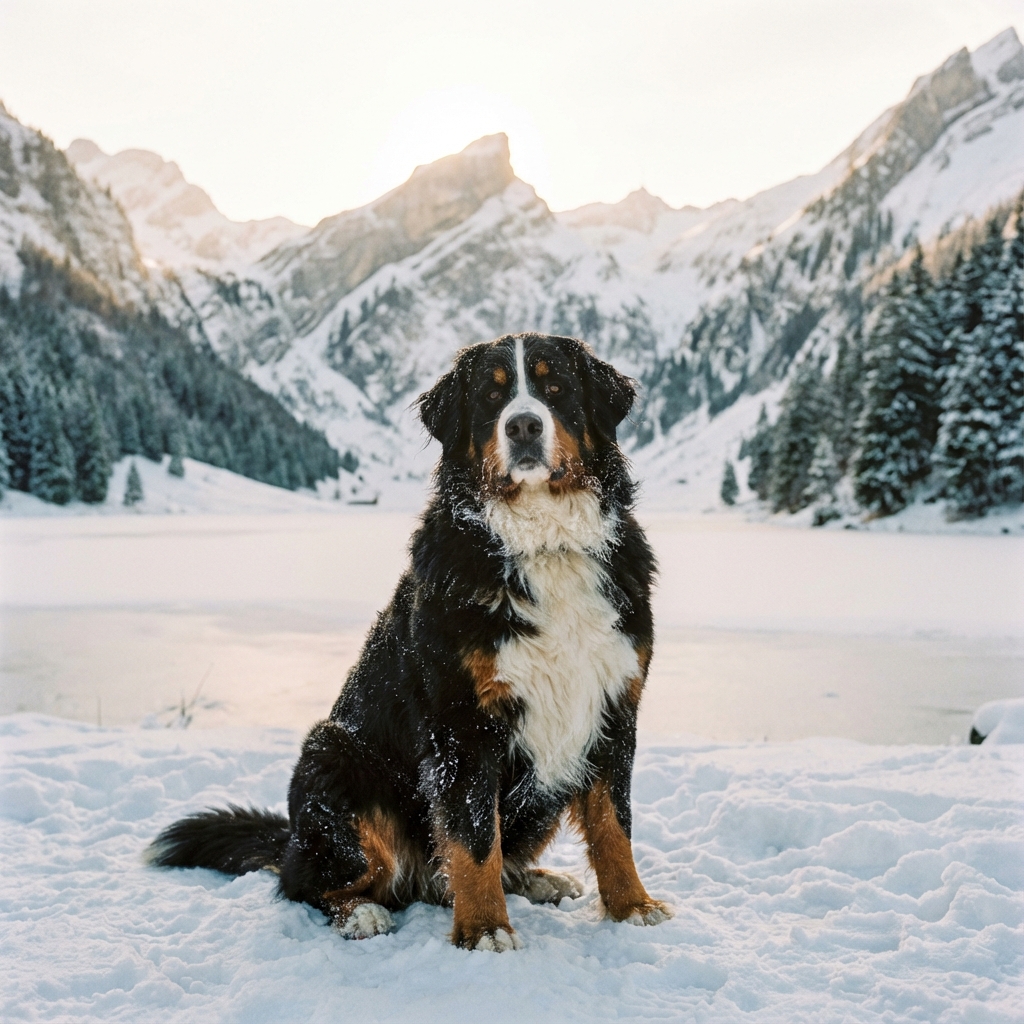
The Bernese Mountain Dog is a large Swiss farm dog from the canton of Bern, historically used for drafting, herding, and guarding. It is one of four Swiss Mountain Dog breeds and is distinguished by its long, tri-color coat.
The Bernese Mountain Dog, known as the “Berner,” is a large, tri-colored Swiss farm dog. They are calm, placid, and affectionate, contrasting with many higher-drive working breeds.
Originally bred to be the all-purpose farm dog of the Swiss Alps, they were capable of herding cattle, pulling heavy milk carts to market, and watching over the homestead. Today, their main job is usually holding down the living room rug and leaning their heavy bodies against their owners for pets.
Owning one comes with significant responsibilities regarding grooming, climate management, and understanding their notably short lifespan for a breed of their size.
History and Origin: The Poor Man’s Horse
The Bernese Mountain Dog is one of four varieties of Swiss Mountain Dogs (Sennenhund). While the Greater Swiss Mountain Dog, Appenzeller, and Entlebucher all share the same distinctive black, rust, and white coloring, the Berner is the only one with a long, silky coat.
They originated in the canton of Bern, Switzerland, where they were vital to the economy. For centuries, they were known as the “poor man’s horse.” Farmers who couldn’t afford a horse used their strong, broad-chested Berners to pull carts filled with milk cans and cheese wheels to the local dairy. They were true generalists:
- Drafting: Pulling carts.
- Herding: Driving cattle from the valley to mountain pastures.
- Guarding: Alerting the farmer to strangers (though rarely attacking).
By the late 1800s, as industrialization brought machines to replace dog carts, the breed nearly went extinct. Swiss fanciers rallied to save the breed in the early 1900s, and today they are one of the most beloved large breeds globally.
Physical Characteristics
The Berner is a large, sturdy dog with heavy bone structure. They are built for strength, not speed.
- Height: Males 25-27.5 inches (64-70 cm); Females 23-26 inches (58-66 cm).
- Weight: Males 80-115 pounds (36-52 kg); Females 70-95 pounds (32-43 kg).
The Tri-Color Coat
The coat is the breed’s trademark. It is thick, moderately long, and slightly wavy. It is a double coat designed to insulate against freezing Alpine winters.
- Jet Black: The base color.
- Rich Rust: Markings on the cheeks, eyes (“eyebrows”), legs, and chest.
- Crisp White: A white blaze on the face, a white “Swiss cross” on the chest, white feet, and a white tail tip.
The “Berner Smile”
Many Berners appear to be smiling. Their lips are slightly loose (but shouldn’t be too droopy), and when panting, the corners of the mouth turn up, giving them a happy, goofy expression that melts hearts.
Temperament: The “Velcro” Giant
The hallmark of the breed is its temperament. The breed standard describes them as “self-confident, alert, and good-natured.”
The Gentle Companion
They are remarkably gentle with children. They are tolerant and patient, often allowing toddlers to crawl over them (though this should always be supervised). They are rarely aggressive.
Strong Attachment
Despite their size, they seek close physical contact with their owners. They will sit on your feet, lean their entire weight against your legs (the “Berner Lean”), and attempt to share furniture. They do not do well as outside dogs; isolation leads to unhappiness and behavioral issues.
Aloof with Strangers
They can be reserved with strangers, standing back to assess the situation. This is their watchdog heritage. Once introduced, they are polite, but they reserve their true goofiness for their family.
Training and Exercise Needs
Activity Level
Berners are “moderately” active. They are not marathon runners.
- Daily: 30-60 minutes of walking is usually sufficient.
- Hiking: They make excellent hiking partners in cool weather.
- Drafting: Many owners participate in carting competitions, tapping into their ancestral desire to pull.
Training
They are eager to please but can be slow to mature (both physically and mentally). They remain “puppy-like” for years.
- Sensitivity: They have soft souls. Harsh corrections will hurt their feelings and make them shut down. Positive reinforcement works best.
- Leash Manners: You must teach them not to pull while they are young. A 100lb dog who decides to chase a squirrel will drag you down the street.
Climate Control: The Heat is the Enemy
Crucial Warning: Berners are built for snow. They struggle in the heat.
- Heatstroke Risk: Their black coats absorb the sun, and their thick undercoat traps heat. In temperatures over 70°F (21°C), exercise should be limited.
- Summer Care: They need air conditioning. Walks should happen early in the morning or late at night. Always bring water.
Health and Lifespan: The Hard Truth
This is the most heartbreaking part of owning a Berner. They have one of the shortest lifespans in the dog world, typically 7 to 10 years. There is a Swiss saying: “Three years a young dog, three years a good dog, three years an old dog. Anything else is a gift.”
- Cancer: The breed has a staggeringly high rate of cancer, particularly Histiocytic Sarcoma, Mast Cell Tumors, and Lymphosarcoma.
- Hip and Elbow Dysplasia: Common in all heavy breeds. Buying from health-tested parents (OFA) is mandatory.
- Bloat (GDV): As deep-chested dogs, they are at risk of their stomach twisting.
- Von Willebrand’s Disease: A genetic bleeding disorder.
Grooming: Embrace the Fur
If you own a Berner, you will have hair on your clothes, in your car, and in your coffee.
- Shedding: They shed year-round and “blow coat” (lose their entire undercoat) twice a year. During this time, the fur comes out in clumps.
- Brushing: You need to brush them 2-3 times a week with a slicker brush and metal comb to prevent mats, especially behind the ears and under the legs.
- No Shaving: Never shave a Berner. Their double coat insulates them from heat as well as cold. Shaving ruins the coat texture.
Is a Bernese Mountain Dog Right for You?
Yes, if:
- You live in a cooler climate (or have great AC).
- You want a large, impressive dog that is safe with kids.
- You don’t mind dog hair as a condiment.
- You want a dog that will be your shadow.
No, if:
- You live in a tropical region.
- You want a jogging partner for 5-mile runs.
- You have a tiny apartment (they need space to sprawl).
- You cannot handle the emotional toll of a shorter lifespan.
The Bernese Mountain Dog is a gentle, loyal companion. Their shorter-than-average lifespan is one of the most significant factors for prospective owners to consider.
Related Breeds

Greyhound
Der Greyhound ist ein uralter Sichthund, der Sprintgeschwindigkeiten von bis zu 72 km/h erreicht. Di...

Afghan Hound
The Afghan Hound is an ancient sighthound from the mountains of Afghanistan, known for its long, sil...

Airedale Terrier
The King of Terriers, the Airedale Terrier is a bold, athletic, and intelligent dog that combines si...